
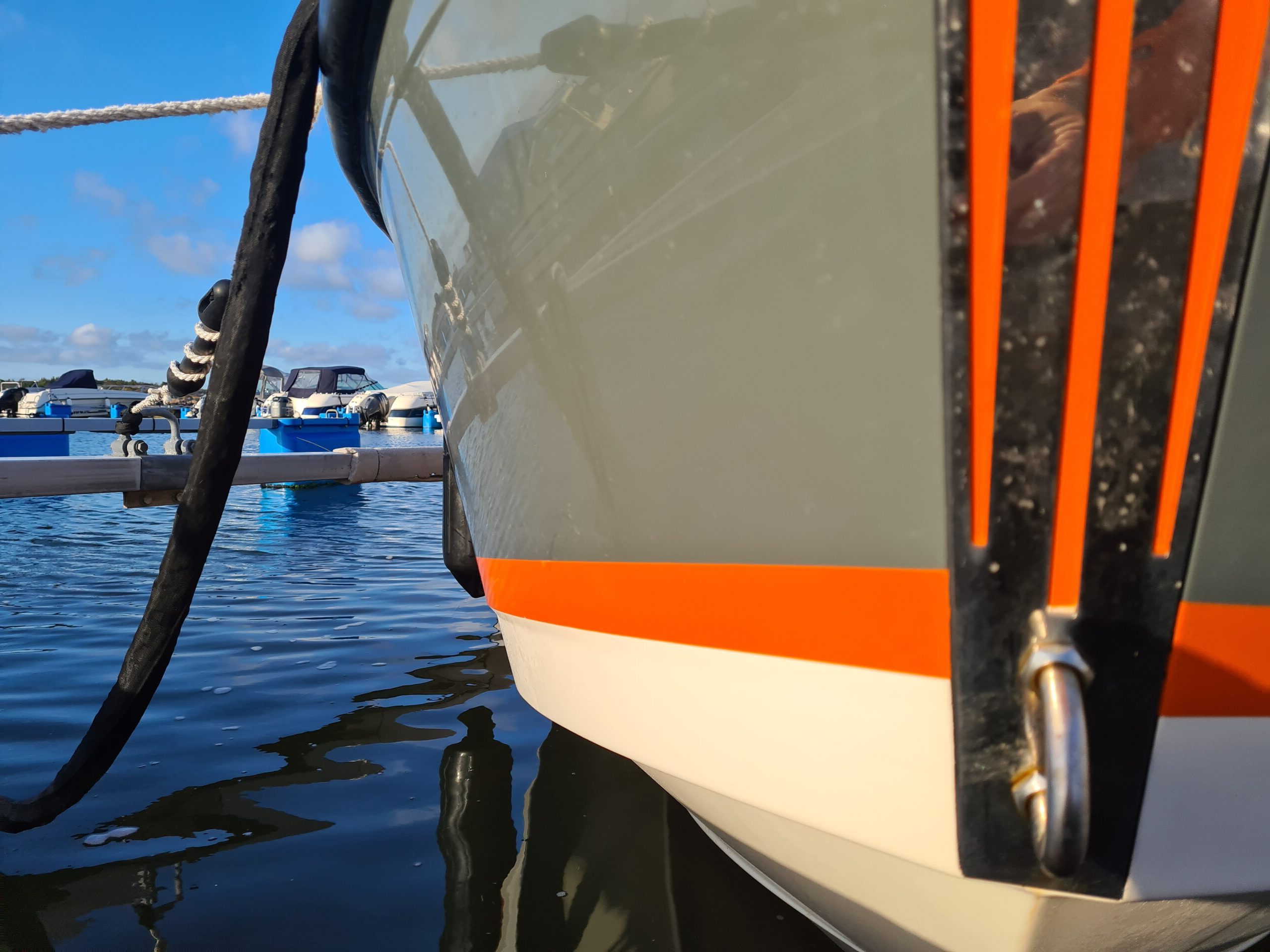
Does JB Weld Work on Fiberglass Boats?
JB Weld and similar epoxy putties will bond to fiberglass and can stop a slow leak in an emergency, but they are not a permanent marine repair. The product lacks the flexibility, water resistance, and structural reinforcement that a proper resin-and-cloth laminate provides. Use it to get home from the water, then have the damage repaired correctly before the boat goes back out. Learn more about Fiberglass Repair.
What JB Weld Actually Is and How It Behaves on Fiberglass
JB Weld is a two-part steel-reinforced epoxy putty originally designed for metal repairs. It cures hard, bonds to a wide range of surfaces including fiberglass gel coat, and is waterproof once fully set. The problem is that cured epoxy putty is rigid and brittle compared to a fiberglass hull, which flexes constantly underway. That flex eventually cracks the putty patch, lets water back in, and can cause the surrounding laminate to delaminate further. It fills a void but does not restore any structural strength to the damaged area.
How a Proper Fiberglass Repair Differs
A correct fiberglass repair uses marine-grade polyester or epoxy resin combined with woven or chopped fiberglass cloth. The cloth is saturated with resin, laid into the damaged area in overlapping layers, and allowed to cure. This process chemically bonds to the existing laminate and rebuilds the structural matrix of the hull. The result flexes with the boat, resists osmotic blistering, and can be faired and painted to an invisible finish.
Epoxy putty skips the reinforcement entirely. It sits on top of or inside the damage like a plug. For a cosmetic scratch or a pinhole in a non-structural area, that may be acceptable for a season. For any crack longer than an inch, any impact damage, or anything near the waterline on a trailered or moored boat, putty alone is not enough.
- Resin-and-cloth restores tensile and flex strength; putty does not
- Proper repairs bond chemically to the existing laminate
- Fairing compound and gel coat can be applied over a resin repair for a factory finish
- Putty patches are visible under paint and may telegraph cracks within a season
When Epoxy Putty Is Acceptable vs. When It Is Not
Use this quick guide to decide whether a putty fix will hold or whether you need a full fiberglass repair.
Acceptable: Emergency patch:
If you take on water away from the dock, epoxy putty pressed into a crack can slow or stop the leak long enough to get back safely. Treat it as a one-trip fix only.
Acceptable: Small cosmetic chip:
A gel coat chip smaller than a dime in a non-structural area above the waterline can be filled with putty and sanded smooth as a low-cost cosmetic solution.
Not acceptable: Structural cracks:
Any crack that runs through multiple laminate layers or shows flex movement needs cloth and resin. Putty will crack again under load.
Not acceptable: Below-waterline damage:
Constant water pressure and osmotic forces will work behind a putty patch below the waterline. Delamination and blistering are likely within one season.
Not acceptable: Impact damage:
Collision damage compresses and fractures the laminate beneath the surface. Putty covers the visible hole but leaves weakened material underneath that can fail suddenly.
Not acceptable: Transom or stringer repairs:
Transoms and stringers are load-bearing. Any repair to these areas must restore structural integrity with proper laminate work, not filler.
Getting a Lasting Repair Instead of a Temporary Fix
If you have already applied JB Weld as an emergency measure, the next step is to have a technician grind out the putty, assess how far the damage extends into the laminate, and rebuild the area with the correct materials. Skipping that step and leaving the putty in place is tempting because the boat looks fine, but moisture will migrate under the patch and the repair area will grow. A mobile fiberglass repair technician can come to your slip or driveway, which means you do not have to haul the boat to a yard and wait weeks for a service slot. For a full breakdown of what a professional repair involves, visit our fiberglass repair page.
Related Guides
Previous: Can You Apply New Fiberglass Over Old Fiberglass on a Boat? | Next: Signs Your Boat's Fiberglass Needs Professional Repair (Not a DIY Fix)
Frequently Asked Questions
Will JB Weld hold underwater on a boat hull?
JB Watel is rated as waterproof once cured, and it will hold for a short period underwater. However, prolonged submersion, water pressure, and the constant flex of a moving hull will eventually break the bond. It is not a reliable long-term solution for any below-waterline repair.
Can I use JB Weld MarineWeld instead of regular JB Weld?
MarineWeld is formulated to be more water-resistant than the original product, which makes it a marginally better choice for a temporary boat repair. It still does not include any fibrous reinforcement, so it carries the same structural limitations. The same rules apply: fine for an emergency, not a permanent fix.
How do I know if my fiberglass damage is structural or just cosmetic?
Press gently around the damaged area. If you feel flex, hear a dull thud instead of a solid knock, or see the surface move, the laminate beneath is compromised and the repair is structural. Cracks that run in a star pattern from a point of impact almost always go deeper than the gel coat.
How long does a proper fiberglass repair last compared to a putty patch?
A correctly done resin-and-cloth repair, properly faired and sealed, can last the life of the boat. A putty patch in a stressed or wet area typically shows signs of failure within one to two seasons, sometimes sooner if the boat is used hard.
Is fiberglass repair something I can do myself, or should I hire a professional?
Small cosmetic repairs above the waterline are within reach for a careful DIYer with the right materials and patience. Anything structural, below the waterline, or larger than a few square inches benefits from professional work because improper laminate layup can trap moisture and create bigger problems than the original damage.
How much does a professional fiberglass repair typically cost compared to a DIY putty fix?
A tube of epoxy putty costs a few dollars, while professional fiberglass repair is priced by the size and complexity of the damage. The relevant comparison is not the upfront cost but the cost of redoing a failed patch, repairing secondary delamination, or dealing with a hull failure on the water. For most damage beyond minor cosmetic chips, professional repair is the more economical choice over time.